
Last night, Stephen Colbert walked off the Late Show stage for the last time. Sir Paul McCartney was there to say goodbye, as was Elvis Costello. The three of them closed 33 years of television history with the Beatles’ “Hello, Goodbye.”
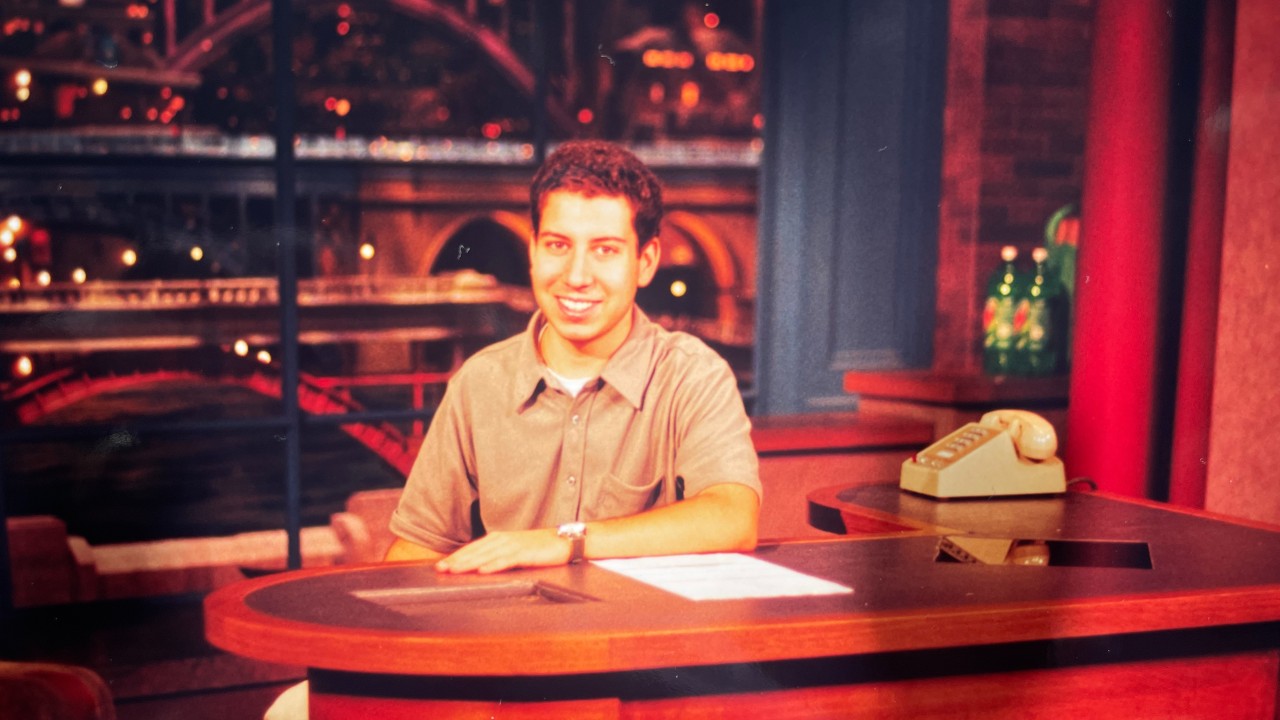
I was an intern at that show in the year 2000 — twenty-six years ago, twenty years old, still in school, with no idea what I’d walked into. It taught me some of my most important lessons in business, show business, and life.
What Nobody in the Audience Knew
What I didn’t know when I walked in is what nobody in the audience ever knew. What they saw was Dave — comfortable, sharp, making guests look good, making it all look easy. It was not.
The research would have stopped most people cold. This was before everything was online and there was a team of researchers who were literally buying magazines, every publication, every newspaper, and they treated their work like scholarship. When a guest was booked, they pulled everything.
Every guest who sat across from Dave went through a four-step pipeline before they ever spoke to him on stage. Research was just the beginning. A producer got on the phone — a handwritten, hand-transcribed call, no recording, no auto-transcript — to surface the best stories and potential questions. That producer synthesized it all into a briefing and then Dave made the final call on what to actually ask and in what order. By the time he sat down with a guest, he knew what was going to be great about that conversation. He knew where the laughs were. He knew which story had a better ending than the guest realized.
All of that, invisible — every night, five shows a week.
Both Sides of the Curtain
Six years after that internship, I was working for Mike Myers — first as a personal assistant, eventually as an associate producer on one of his films. Mike was booked on Letterman and I got to go back to the show, to see it from the other side of the curtain.
Before Mike got on the pre-interview call with the Letterman producer, we worked the material. Mike was clear about it: Letterman’s tough, the stories have to be good, the jokes have to land. So we sat down before the call and figured out what the best material was, what was worth putting on the table. When the producer called, Mike had the right stuff ready.
Then something happened on stage that I’ll never forget. Mike was telling a story and he hit a good laugh line — the audience responded — but I knew from our prep that there was another beat coming, another punch line that we’d workshopped, and it hadn’t landed yet. It looked like he might let it go, but Dave caught it. Without any visible signal, without any break in the conversation, he cued Mike back to the story. The audience got the second laugh. The bit was complete, and it killed.
That was the pipeline operating in real time. Deep preparation, invisible support. The duck’s feet churn below — and the duck on the surface just glides. That’s what Dave built.
Why does structure make a show feel spontaneous?
Dave was very strict about the routine. Strict about what happened when, where things went, who went where. And it never squashed anything — not the fun, not the improvisation, not the moments that made you lean forward in your seat. It was the opposite. It was the absolute structure that needed to be built, the scaffolding that needed to be in place, so that fun could happen.
The Scaffolding That Makes Fun Possible
That’s what SFG runs on — not the brand of it, not the mythology, but the actual mechanics: the research, the prep call, the briefing, the decision before the show so the show can be the show. So that when something unexpected came up — and it always comes up — the system could absorb it and keep moving.
Great prep equals great results. The people at SFG already know this. I don’t pull teeth on preparation. I don’t argue for another run-through. Everyone on this team is on the same page about what getting it right actually requires.
That’s a hiring criterion, not a culture statement.
What Others See First
There’s one thing I didn’t learn at the Late Show. I brought it in myself, and I didn’t know I had it until other people told me.
At that internship, walking the halls of a show where the talent was famous and the pressure was constant. The right response — the only functional response — was to be calm: get the job done, answer the question, handle the thing in front of you without making the room tense. I wasn’t managing myself into that, it was just how I was wired. It was one of the reasons I could hold that job.
Twenty-six years later, our clients say the same thing after the shows that test everyone — the last-minute breakout where the presenter walked in an hour before showtime with five unplanned demands — and what they come back to is this: you were so flexible and so calm.
Calm is one of our core values at SFG — we hire for it, and we select against the absence of it. If you can be effective without being calm, fine, but you’re just not going to last long in this ecosystem.
I didn’t decide calm was valuable and then build it into the company. Other people decided it was valuable first. The values most inherent in you are the ones other people name before you do.
That’s a signal worth paying attention to — one most people mistake for personality.
The Hidden Work Is the Work
Last night’s final episode ended with Sir Paul McCartney, Elvis Costello, and Colbert on stage — joyful, generous, exactly right: the writers’ room, the pre-interviews, the logistics, the decisions made weeks earlier about how to close something that had been running for a decade.
Every show has a system — designed or improvised. The difference is whether yours is built well enough that the people on stage never have to think about it — and the people watching never know it exists.
Ask your best clients what they value about working with you. They probably named it before you did.