
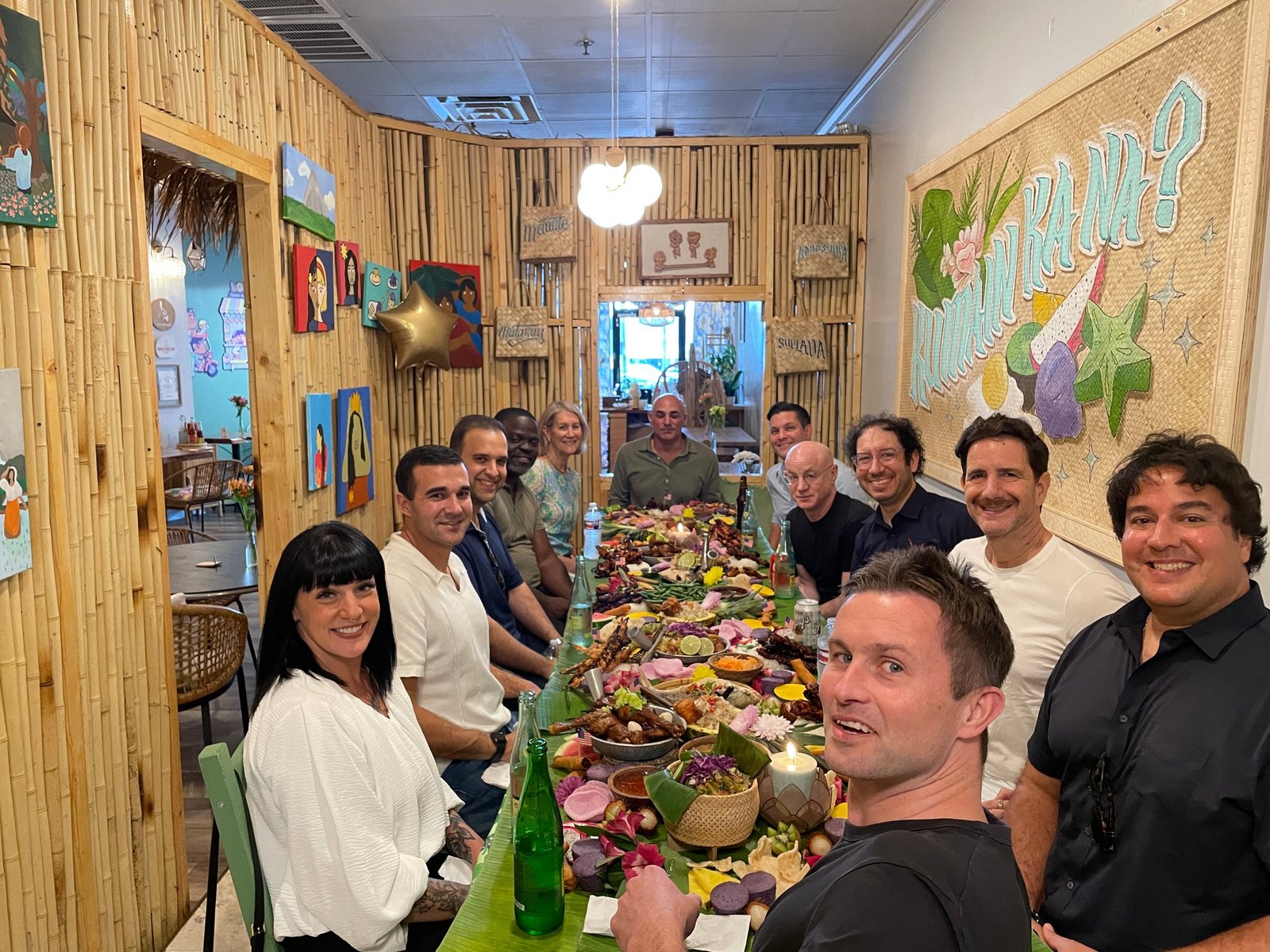
I moderated a dinner about the idea of legacy, expecting a conversation about names on plaques, buildings and businesses passed from one generation to the next. I thought we’d be talking about the things people build with the hope that something of them will become immortal.
Then we started talking about legacy in terms of what we had inherited. What did people actually remember about their parents and the generations before them?
The conversation became much smaller and more specific. People remembered a father sitting down at the table with his child and having a conversation, or other fleeting moments when a parent was fully there. As they talked about what had stayed with them, the business or the nice house mattered far less than those moments of attention.
We had arrived to discuss legacy and wound up talking about putting our phones away and being with our kids.
What does a conversation about legacy have to do with producing events?
The connection we’re trying to create between a person onstage and a person in the audience is personal, even when they’re sharing a room with hundreds of other people. We want them to be present with one another. To make a meaningful connection. The larger the room, the more work it takes to make that possible.
What I Mean by Impact
I started working with Chris Anderson at TED in 2010. In those early days, I remember him talking to people around the organization about the satisfaction of serving others. Find work that benefits other people. Dedicate yourself to that.
I’ve been thinking about that advice again. Earlier in my career, I understood impact in a broad, philanthropic way. Over time, my understanding has become more about presence, support and empathy: how you are with people, and what you can do for them while you’re there.
The legacy dinner gave that idea a very concrete form. People were describing something a parent had done with them for a few minutes, and it still mattered enough to bring up in a conversation about an entire life. The scale of the moment and the importance of the memory were very different.
That’s a useful thing to have in mind when your work involves bringing people together for a short period of time.
Reaching Across the Room
At a dinner table, the person you’re speaking to is right there. In a theater, they might be 100 or 200 feet away. The speaker has a stadium’s worth of lighting in their face, and somehow we want them to speak with the ease of a conversation over dinner.
Some of our speaker coaching amounts to teaching people how to speak again. We want them to talk as if they’re at the table with you, while they’re standing in a situation that feels very different. The distance and the lights are real. Helping someone retain that personal quality under those conditions is part of the work.
But the speaker can only do so much from where they’re standing. We also have to think about how that person reaches the people furthest away.
The View from the Last Seat
Where do we put the camera? Which shot do we select? How big is the screen, and how far away is the last seat?
We have to consider the whole package. A discussion about screen size needs to include the person who will be looking at it. A discussion about how the speaker presents needs to account for the room they’re speaking into. Coaching and the audience’s view of the speaker have to work together if we’re going to create that feeling of being present with one another across a large room.
After Everyone Leaves
The part I find difficult is what happens afterward. In a local community, you keep encountering the people you’re trying to help. You can see more of what happens over time. With events, we bring people together, give them resources and support, and then everyone disperses. From where I stand, the impact can feel as though it disappears with them.
I still struggle to reconcile that. The legacy dinner doesn’t tell me what any particular attendee took away from a show we produced, or whether it stayed with them.
But the people at that dinner were remembering moments of presence that had lasted only a little while. Years later, those moments were what they chose to tell us about. That gives me a reason to take the short time we have with an audience seriously, even when I won’t be there to see what comes of it.