
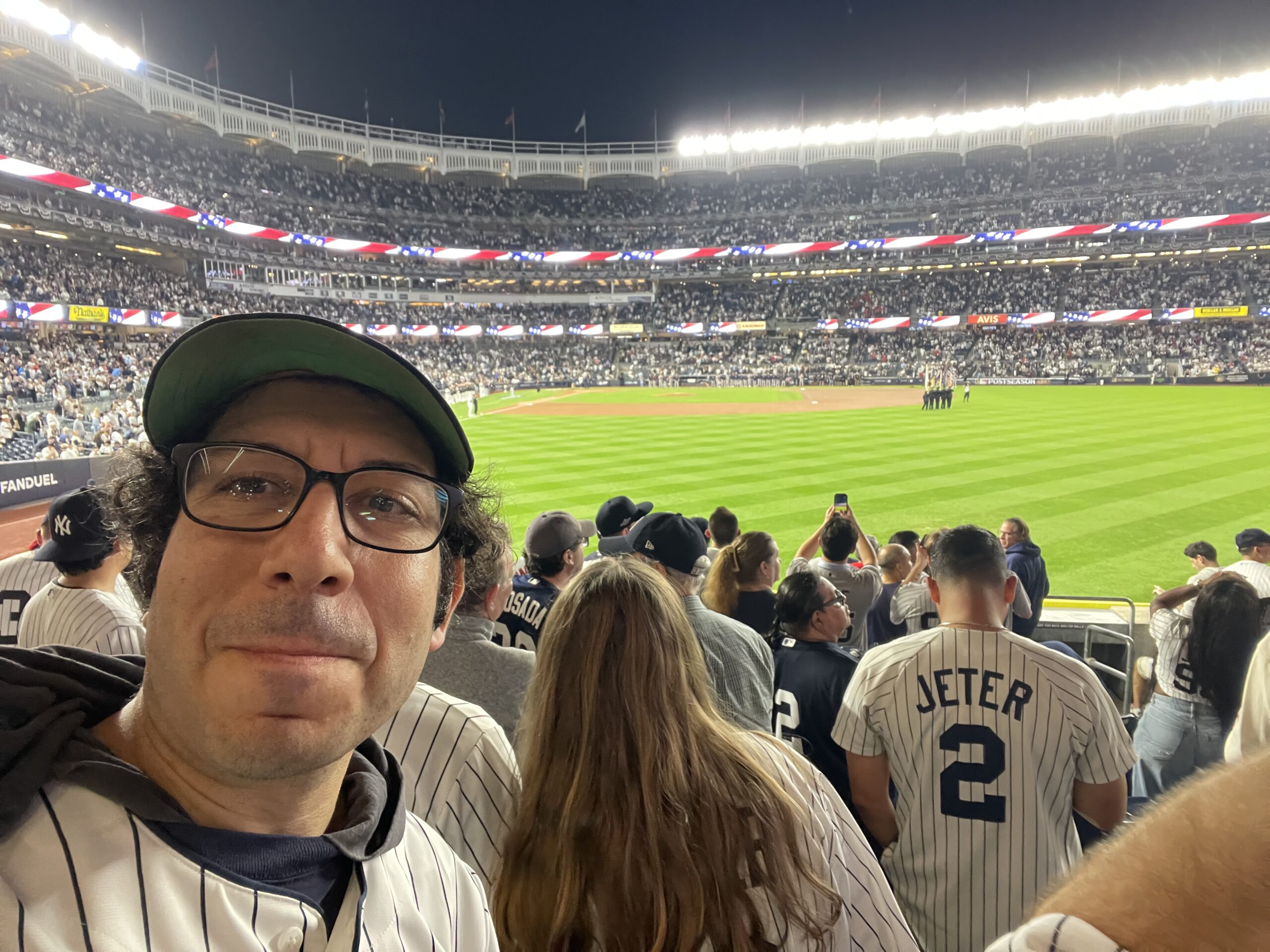
I went to a Yankees playoff game recently, wearing Don Mattingly’s number 23. Donnie Baseball was my guy growing up. I had a cushy seat out in the outfield, plenty of legroom, and a great view. By the end of the night, we’d won and I’d been showered in beer.
There was plenty to enjoy. But walking around the stadium, I was looking for something I wasn’t sure I’d found yet: the ghosts.
The Yankees have all this history. You can build a bigger, cleaner, more comfortable home for them, and I appreciate every inch of the extra legroom (at Fenway, my knees were practically in my chest). Still, 17 years into the new Yankee Stadium, something didn’t feel right. It had the grandeur, but it doesn’t have the same vibration.
What makes a venue feel like it has history?
For me, the ghosts are the most powerful part of what makes a venue special. The people who were there before you, the things that happened, the memories that have accumulated until you can feel them when you walk in. A beautiful building gives you something to look at. A place with that kind of history gives you something to become part of.
What a place brings with it
I’m in the events business. I spend a lot of time thinking about venues, what they make possible, and what people will experience inside them. Some places have an energy you can feel before you’ve done anything to them.
The amphitheater in Amman is one of those places. I was there with TED’s global team for TEDxAmman, in an ancient space filled with speakers, performances, and a crowd singing along to a rock band. When I think about places that buzz with the energy of what’s happened in them, that amphitheater comes straight to mind.
Fenway has it, too. Whatever my allegiance as a Yankees fan, I can feel it there. The history belongs to the place, and you encounter it even when you’ve come for something other than baseball.
Before I ever attended a game at Fenway, I saw Bruce Springsteen play there — the first rock concert the ballpark had ever hosted, ninety-one years into its life. From center field he called for “a rock and roll exorcism,” aimed straight at the Curse of the Bambino. The crowd loved it (I was a little upset lol).
That moment had vibration. He was naming something the whole audience had walked in carrying. Nobody needed the curse explained to them; the building had been holding it for most of a century, and he just said it out loud. (Amazingly, the very next season, the Red Sox broke their 86-year drought. Thanks Bruce.)
That’s the other side of having ghosts. A place can hold disappointments as powerfully as triumphs. People bring those memories with them, and a performer can call on them because everyone already understands the story.
At Yankee Stadium, the challenge was how to carry all of that feeling into a new home. The games that made the old stadium special had happened somewhere else.
Bringing the ghosts along
On this visit, my buddy and I went to Monument Park. He’d never been. Usually, it’s wall to wall, with a line to get in. This was a playoff game and the stadium was a zoo, but we walked right in. Then, somehow, everyone else disappeared and we had the place to ourselves.
It was surreal. We took pictures with the plaques of our favorite players and had time with a place I’d never experienced that way. In the middle of all that activity, we were standing alone with the team’s history. There was something very special about it.
I also visited the Yankees Museum for the first time. There’s a wall of signed baseballs, bringing generations of players into the same space. Between that and Monument Park, the history has a physical presence in the new stadium. You can spend time with it, recognize someone, remember something, tell a story.
The fans are doing their part, too. The jerseys start conversations. You spot someone wearing the same number, or a player you love, and pretty soon you’re hearing why that player matters to them. I wore 23 because of Mattingly. Somebody else has their own reason for wearing Jeter’s number or Rivera’s.
That’s a different kind of history from a list of championships. It’s personal, and people are carrying it through the gates themselves.
Put those things together and you can see how a new space starts to acquire an old identity. The team gives the memories a home in Monument Park and the museum. The fans arrive with their attachments and keep the stories moving. All of it helps a new building feel like it belongs to the same long story.
For those of us who make events, there’s something useful in paying attention to that. Choosing a venue also means considering the memories and associations people bring to it. When the space is new, the audience may be bringing the history you hope the room will eventually have.
Making the next memories
I can feel the new Yankee Stadium gathering momentum. That playoff win added something to the place for me. The beer shower is now part of my own history there.
But the feeling takes time to accumulate. The wins, the comebacks, the rookie hitting a home run in his first game. Those are the moments people will talk about when they come back. Eventually, someone walks into the stadium with a memory of what happened right there.
When Derek Jeter addressed the crowd after the final game at the old Yankee Stadium, he asked fans to carry their memories into the new one, add new memories, and pass them along to the next generation. That’s a pretty good description of how the ghosts travel.
Then Jeter and the Yankees won the World Series in 2009, the new stadium’s first season. They’d brought the old ghosts with them and immediately gave the new ones a championship to start with.